Monday, August 31, 2015

Romania, the cheapest seaside destination in the region

Romania has become the cheapest seaside touristic destination in the region, as tourists spend on average EUR 43 for the holiday basket with eight food and non-food products. Last year, Romania ranked 4th, according to a study carried out by the Federation of Romanian Tourism Employers (FPTR).

The value of the holiday basket dropped to EUR 43, due to the VAT cut on food from 24% to 9% enforced by the Government starting June 1.

The study carried out by the Post Office Travel Money site annually monitors the prices of food and non-food goods in 40 holiday destinations all over the world, but not in Romania. The local Tourism Employers Federation has continued this study, introducing similar products and services prices for Romania.

The cheapest seaside destinations include countries such as Bulgaria, Spain, Turkey, Greece or Croatia.

editor@romania-insider.com


Source: Romania, the cheapest seaside destination in the region

Sunday, August 30, 2015

'Running from death': Refugees pack streets of Turkey

Izmir, Turkey - Izmir, Turkey's third-largest city, lures travellers with its 4,000 years of history and pristine beaches.

But in the city centre, in the neighbourhood of Basmane, the hundreds of people camping in the streets are drawn to the Aegean Sea for vastly different reasons. They are refugees, most fleeing the wars in Syria and Iraq, trying to cross to Greece and find refuge in Europe.

Greece has seen a big influx of refugees from Turkey, including more than 50,000 in July alone. Turkey's proximity to Greece makes cities like Izmir hotspots for refugees, who are often told that the gates to Europe lie just 40 minutes away.

Hotels and restaurants in Basmane, once filled with tourists, are now crammed with refugees - as are alleys, bus stops and parks.

Khaled, 51, fled Damascus in 2012 after the Syrian army besieged his house. Three years later, the end of the civil war is nowhere in sight, and Khaled now lives on society's fringes, struggling to make a living. Lying on a blanket in a playground in Basmane, Khaled - whose name, along with those of other refugees interviewed for this story, has been changed to protect his identity - and his family of seven say they are waiting for smugglers to take them to Greece.

"Camps are too bad nowadays," he told Al Jazeera. 

RELATED: Refugee crisis strains resources on Greek island

Turkey, which has an open-door policy for Syrian refugees, is currently hosting two million of them - about 45 percent of all refugees from the country.

"All Syrians staying here would go back to Syria if the war ended now," Khaled said. "Never in our lives have we thought of leaving Syria, but now we must go."

In Damascus, Khaled had a three-bedroom house, a job at the airport scheduling aircraft arrivals, $300,000 worth of property and even a summer house. But, he explained, "the army took everything and sold it in the market".

At first, life in the camp in Suleiman Shah, near the Turkish town of Akcakale, was good compared to the situation in Syria. "The government gave us food, tents to stay in the camp and food cards," he said. But today, "there are a lot of Syrians, and there is no place [in the camps]".

Ahmed, 38, fled Syria in 2013 from Deir Az Zor with his wife and four children. Khaled and Ahmed have partnered up for the perilous journey ahead. "The children haven't studied in four years, and the war may go on for 10 more," Ahmed told Al Jazeera. He said education is important to him - his oldest child is nine years old - but there are no actual schools in the camp and dozens of students for each teacher.

Unable to work and striving to make ends meet on stipends of just 85 Turkish lira ($30) a month for each person in the camp, both Ahmad and Khaled left in search of work. "A lot of people work for nothing," said Khaled. "Doctors and engineers work in construction."

Syrian refugees are not granted special work permits in Turkey, therefore, many work illegally and earn lower wages than their Turkish counterparts. "Women work, even the children work," he said. "Life is too expensive. If we want to live, all of us need to work."

 Inside Story - Chaos in Kos: Greece on the frontline of refugee crisis

According to the men, most Syrian refugees work in construction. "Most people work for nothing," said Ahmed. "Turkish people made 80 lira ($27) and they gave us 20 ($6.80)... We are going to Europe, and wherever we arrive, we will stay. We just want to go out far away from here."

RELATED: Turkey denies border guards shot Syrian civilians

The boat to Greece will cost the men $1,100 a person. Children under five are allowed to board for free.

"We only have money to reach Greece. Afterwards, we don't know what we'll do," said Khaled. The men estimate that their journey to Europe - with their final destination unknown - will cost another $3,000 for each person. "When I arrive to Europe, I will work it out... We may die on the way, but we don't have a choice."

The families attempted to cross the sea once before but were caught by authorities before climbing into a boat. They spent a night at a police station, where they were processed and told to leave Turkey. 

At least 7,000 refugees are currently stranded on the Greek island of Kos, and hundreds more - mostly Syrians, but also Afghans and Iraqis - are waiting to follow. Earlier this month, about 2,500 refugees were locked inside a stadium in Kos without access to water. But for many, the perils of the journey are balanced by the prospect of a future in Europe. 

Summer is the prime season for refugees to risk their lives, taking inflatable dinghies across the Mediterranean. But Khaled and Ahmed do not fear capsizing as much as the possibility that the coastguard patrolling the sea may send them back to Turkey.

So far, Turkey has spent over $5bn on humanitarian aid for Syrian refugees, allowing many men, women and children to reach safety. But even so, many are finding that life in Turkey is not easy. "We were running from death, and we are finding death here," Khaled said.

Source: Al Jazeera


Source: 'Running from death': Refugees pack streets of Turkey

Saturday, August 29, 2015

Destination Istanbul: Discover the unique city where east meets west

Istanbul is one of very few cities in the world that straddles two continents – Asia on the eastern shores and Europe to the west.

Divided not only by the Bosphorus Strait but by the Golden Horn, which forms a natural harbour, this vibrant blend of diverse cultures makes it a unique and enthralling destination.

Former Constantinople may no longer be the capital of Turkey but it is still the country's largest metropolis with a sprawling population of more than 14 million.

Since its turn in the limelight as European City of Culture in 2010, new businesses and tourist numbers have flourished, with boutique hotels, upmarket restaurants, trendy rooftop bars, cafés and nightclubs, particularly around the bustling waterfront.

A cruise by day or night is a great way to see Istanbul – even if it's just a short hop from one bank to the other – while the Galata Bridge also offers stunning panoramas of the skyline, especially at sunset.

Boasting six minarets, the 17th century Blue Mosque is undeniably impressive and looks even more magical when lit up at night.

The Galata Bridge has fantastic views

It takes its name from the mainly blue handcrafted Iznik tiles decorating its vast interior and welcomes modestly dressed visitors outwith prayer times.

Topkapi Palace is another must-see as it was the heart of the Ottoman Empire for nearly 400 years. The palace complex enjoys some of the most picturesque views, while the steamy stories of Sultans and harems leave even the glittering treasury jewels in the shade!

Nearby Aya Sofia, a cavernous church-turned-mosque-turned-museum, has survived 37 earthquakes as well as many changes of religion and rulers. Flickering lights illuminate the hushed interior of this sixth-century Byzantine masterpiece with its intricate mosaics.

The smells and sounds of the city are intoxicating and will lure you to atmospheric restaurants with tasty mezes such as spicy prawns, stuffed vine leaves and kebabs. Seafood lovers should head to lively Kumkapi, where diners are entertained by live music, belly dancers and vivacious ice cream sellers.

You can haggle for a bargain at the Grand Bazaar

No trip to Istanbul would be complete without shopping for bargains, whether you're on the hunt for spices, nuts and sweets or leatherware, slippers and jewellery. The Spice and Grand Bazaars are filled with colourful stalls – it's easy to get lost in the maze.

Haggling is obligatory, along with hospitable offers of apple tea. If you keep smiling and aim for about half the asking price then you shouldn't go far wrong.

Don't be surprised if you end up heading home with a rug squashed into your suitcase. Turks make very persuasive salesmen, while hand-made carpets in silk and wool can also be a good investmentand special souvenir.

This article was brought to you in association with Turkish Airlines who operate 9 flights a week to Istanbul from Edinburgh. Prices start from just £159 per person, including tax.

To book or for more information, visit www.turkishairlines.com or call 0844 800 6666.


Source: Destination Istanbul: Discover the unique city where east meets west

Friday, August 28, 2015

Europe's life-jacket capital

Life jackets on sale in Izmir

The city of Izmir on Turkey's Mediterranean coast has long been known as a tourist destination. But now people fleeing Syria's civil war are using it as a staging post on their journey to Europe and providing shopkeepers with an unmissable business opportunity, reports the BBC's Manveen Rana.

Tourists have always flocked to Izmir, drawn by the ancient ruins and the beauty of the Aegean coast. But now the city is attracting hordes of people for a very different reason: it is fast becoming one of the largest hubs for smuggling people into Europe.

In the historic centre of the city, the streets are teeming with families from Syria and Iraq, all waiting for boats to Europe. They live on pavements, railway platforms and roundabouts - anywhere where they can find space. Many of the hotels won't give them rooms even if they can afford them.

Children and babies sleep on mounds of luggage as their families gather their worldly b elongings around them. Everything is wrapped up in black plastic bin bags to keep it dry on the boat journey to Greece. Nobody knows if they will leave tonight or next week. Everyone here is waiting.

The residents of Izmir worry about the effect this will have on tourism, but the shops along one of the main streets have adapted fast. Whether they used to sell souvenirs, shoes, clothes or electrical goods, now they all do a roaring trade selling life jackets and buoyancy aids.

The demand is huge. Not only is the journey to Greek islands in overcrowded rubber dinghies inherently risky, but most of the Syrians and Iraqis I've met here can't swim.

In one of the shops, I meet Mahmoud, a student from Aleppo. He escaped Syria a year ago and is now employed by a Turkish trader to help sell life jackets to his countrymen.

"We sell between 100 and 150 a day, and more and more people are coming every day [to buy them]," he tells me. They have even started selling a new line of life jackets for babies and children.

"We were really scared for the little children when the boat started to sink," a Syrian man tells me among the crowds on the platform of Basmane station. The previous night, he had tried and failed to get to Greece.

"We swam 7km (four miles) back to Turkey and we pushed the children in front of us all the way back to the shore. They were holding on to a rubber ring and that's how they survived."

A rapt audience of Syrians listens eagerly. The people smugglers themselves never mention the possibility of accidents.

"This man," he says, turning to his friend, "he jumped out to make the children in the boat have a chance at another life. He thought without his weight the boat might not sink."

He points at another friend and laughs. "This man can't even swim but he came on this journey. He is really very brave."

They slap each other on the back with the heady exhilaration that comes from looking death in the eye and living to tell the tale.

Image caption Inflated tyres are also in great demand in Izmir

The group had escaped from Raqqa in northern Syria, where so-called Islamic State has its headquarters, four days earlier. Even if they die, they tell me, it is better to attempt a life of freedom than to live under IS. "In Raqqa, your life is not your own - it's theirs. You have to obey their rules or you will be killed. You feel like death is near you all the time."

It soon becomes apparent that the crowd can be separated into two groups - those who have already tried and failed to make the journey, and those who are still hoping to board a boat for the first time. The uninitiated still hoard bundles of black bin bags, whereas the seasoned travellers have either lost or shed the bulk of their possessions and cling only to the things they really need.

It seems life can be whittled down to a few essentials - mobile phones, passports and cash. But how do you protect them if you're faced with the prospect of swimming for hours in the sea? The answer is surprisingly simple. On the pavement outside the station, several men are selling brightly coloured balloons that haven't been blown up.

These, they assure me, will expand to hold even the largest of smart phones, and they're completely waterproof, ensuring your phone is ready to use when you arrive in Greece. "You want yellow, red or pink?" the salesman asks me, holding out the specially modified balloons in a dazzling array of lurid colours. This makes them easier to spot if you become separated from them at sea.

A few days later, I'm in Greece running to catch a ferry and almost trip on something by the water's edge. Looking down, I find the remnants of a torn and battered, but oddly familiar, bright pink balloon.

Rengin Arslan from BBC Turkish also sp oke to Syrian refugees in Izmir, preparing to make the trip to nearby Greek islands.

Listen to Manveen Rana's report from Izmir for the World at One.

Subscribe to the BBC News Magazine's email newsletter to get articles sent to your inbox.


Source: Europe's life-jacket capital

Thursday, August 27, 2015

Greek Replacing Turkey and Tunisia as Favourite Holiday Destination

It's very heartening to hear that British holidaymakers are finding the country as welcome an experience as it ever has been

Despite the doom and gloom surrounding the Greek economy, the volume of British holidaymakers travelling to the country is expected to grow in 2016 – most probably at the expense of destinations such as Tunisia and Turkey, travel retailer Holiday Hypermarket predicts.

As the financial crisis was taking hold, there were fears among many in the industry that tourists would stay away from Greece due to fears over a lack of personal financial security, cancellations and limited recreational services.

However, data compiled by Holiday Hypermarket for the first half of 2015 showed that is volume of sales to Greece had increased to take up around 20% of its overall sales, pushing it ahead of other trouble-hit countries such as Tunisia and Turkey.

"Greece has always been one of the most popular destinations for British holidaymakers and 2014 was a record-breaking year for British tourism to Greece with tourist arrivals at the country's airports above 3 million. It's very heartening to hear that British holidaymakers are finding the country as welcome an experience as it ever has been," said Holiday Hypermarket representative Ian Crawford.

"It seems clear that Greece is replacing Tunisia and Turkey for many travellers, and that should be no real surprise. The financial crisis hasn't impacted tourists at all. Our customers are always quick to tell us how much they love the country – we see that every time we mention it on social media."

Despite this positivity, Crawford warned that increasing demand could in fact push prices up as competition for hotels and resorts increases.

"We've seen some estimates that prices could climb by as much as 15%," he added. "We think this is pretty overblown, but a marginal increase does seem to be on the cards."

For press enquiries please contact sam@ad-rank.com


Source: Greek Replacing Turkey and Tunisia as Favourite Holiday Destination

Wednesday, August 26, 2015

Nargis Fakhri: Capaddocia is an exhilarating destination

Nargis Fakhri has been filming the Azhar biopic in London since early July. The actress, who plays the former Indian cricket captain's second wife, Sangeeta Bijlani, in the film, turned globetrotter and environmentalist while on a week-long work assignment in Turkey.

READ: Nargis Fakhri's Instagram pictures that shouldn't be missed

The actress who was travelling alone befriended a pregnant horse in Cappadocia before heading out for the famous balloon tour which she describes as a "surreal experience" that should be on every wanderers checklist. On Monday, she completed two tours, the caves and the Goreme National Park, and then, spent her evening street shopping, visiting the local sights, taking a cheat day from her diet, and enjoying every minute of her stay in the ancient Greek colony. She bought a few organic lamps from the local market made from dried pumpkins, squash and gourds.

"This is the Valley of love. We take things like clean air and water for granted. The greatest threat to our environment is the belief that someone else will come and save it. Each of us has a responsibility to do our part and I am using less plastic, recycling and saving water," the actress urges.

Today, Nargis flies off to the capital city of Istanbul, promising to return to Capaddocia. "It's an exhilarating destination," she sighs. The actress, who will be seen in the Tony D'Souza directorial, will fly back to the UK on Thursday for a two-week schedule, which will include scenes at the Lord's Cricket Grounds.

Listen to songs of Nargis Fakhri on Gaana.com

For latest Bollywood updates follow us on Twitter >>> @TOIEntertain

For the latest in Bollywood news, like us on Facebook >>> TOIEntertain

For more interesting Bollywood news and pictures follow us on Pinterest>>> timesofindia

For latest Bollywood updates follow us on G+ >>> The Times of India Entertainment

WATCH: Are Nargis Fakhri and U day Chopra back together? - BT

http://timesofindia.indiatimes.com/followceleb.cms?alias=Nargis Fakhri as Sangeeta Bijlani,Nargis Fakhri,Nargis Azhar biopic,istanbul,Capaddocia

Stay updated on the go with Times of India News App. Click here to download it for your device.


Source: Nargis Fakhri: Capaddocia is an exhilarating destination

Tuesday, August 25, 2015

Is the majestic and secular Turkey ready for its horde of tourists?

Essentially, Istanbul closes its doors to no one, and is always willing to accommodate the influx of en masse tourists.

Nearly 42 million tourists flocked to Turkey last year, generating over $36 billion in revenue for its tourism industry and this year, Turkey is expecting more tourists than ever before.

Amidst more than a million other tourists, I too was one of them and visited Istanbul last week. The massive influx of people was evident from an aerial view of the airport, even before we touched down at the airport. Planes landed in quick succession, at intervals of barely a couple of minutes, and the immigration desk lines for foreign passport holders far exceeded those reserved for the locals.

The fruit of Turkey's past efforts in aggressively promoting its many historical, cultural and natural wonders was evident. People from all parts of the world were queuing up to spend their savings, and a devalued Lira afforded access to Turkey's many splendours.

All in all, this was good news for Turkey and tourists alike but there was a nagging question that surfaced and re-surfaced throughout my trip – can the Turks deal with the influx of an extraordinarily diverse and growing milieu of people at its centre?

I did my research and the numbers I found say it all. A quarter of the tourists who visit Turkey this year are also expected to visit Istanbul. According to an estimate by CNN, Istanbul will receive 12 million tourists in 2015 alone. The rest of the tourists will find beach resorts across Turkey's Mediterranean and Aegean coast, or natural wonders across the mainland like Cappadocia, where life is more tranquil and more 'Turkish' compared to cosmopolitan Istanbul. And thus, the first 'casualty' of the influx is that Istanbul, a metropolis of 14.6 million people itself, might not be the best representative of Turkish culture when 12 million others mix to create a constantly changing blend, especially during the summers when tourism is at its peak.
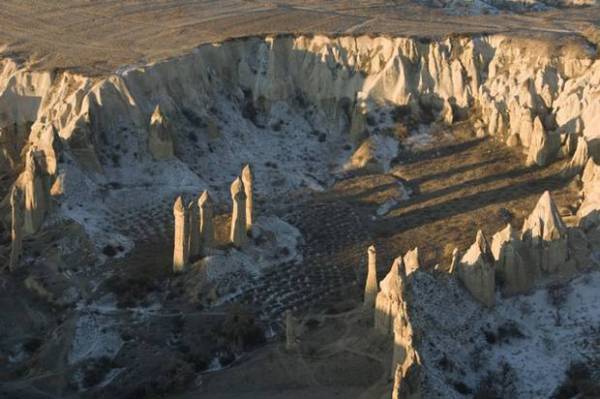
A view from the air. The lunar landscape of Cappadocia is just one of the settings for Inntravel's walks around Turkey. Photo: Reuters
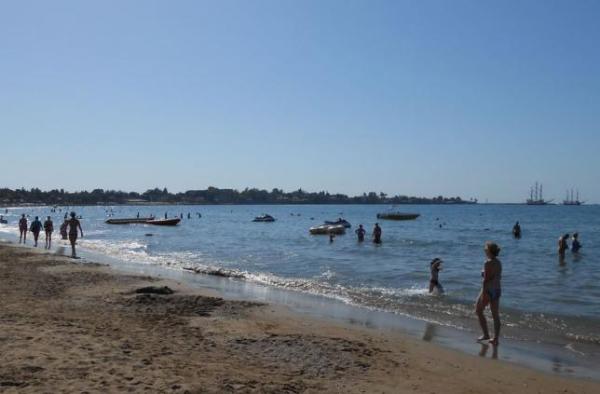
People are seen on the east beach in Side at Turkey's Mediterranean. Photo: Reuters

A Lebanese friend I made described peak season Istanbul best as we walked behind our tour guide in Istanbul's historically rich district, Sultanahmet. She said,

"It's like getting tossed into a gigantic melting pot of cultures, where multiculturalism can sometimes overshadow a quintessential Turkish culture."

I couldn't agree more.

Local and foreign visitors, with the Byzantine-era monument of Hagia Sophia in the background, stroll at Sultanahmet square in Istanbul. Photo: Reuters

In tour groups, that are prevalent, one encounters experiences that are not only specific to Turkey alone. Conversely, the diversity can also lead to a shared expression that transcends cultural boundaries and touches something deeper, something human. It all depends on how openly you wish to communicate with others around you.

For most tourists though, the language barrier may not allow a meaningful exchange with native Istanbullus, who are mostly preoccupied with inquisitive tourists. But the barrier will not rob tourists off the 'Turkish' experience either. A combination of various shows, eateries and tours, designed particularly for tourists, will showcase the Turkish way of life to a tourist for a certain fee. The guides are punctual, informative and commissioned after a four-year undergraduate course in tourism. Tour agencies are regulated and approved by the government and the cuisine supplementing these activities are always strictly Turkish.
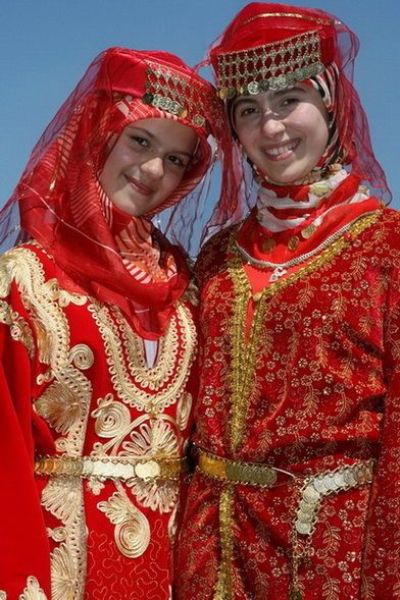
Turkish girls in traditional costumes. Photo: Pinterest

Regardless of how exceptionally well-organised the Turkish tourism industry is, the summer can dampen one's spirits, simply because of all the heat, humidity and queues it brings along. I could have avoided this along with the temporary inflation in prices by planning a trip before June or after August, but then again, we don't always have the luxury of taking breaks when we want them.
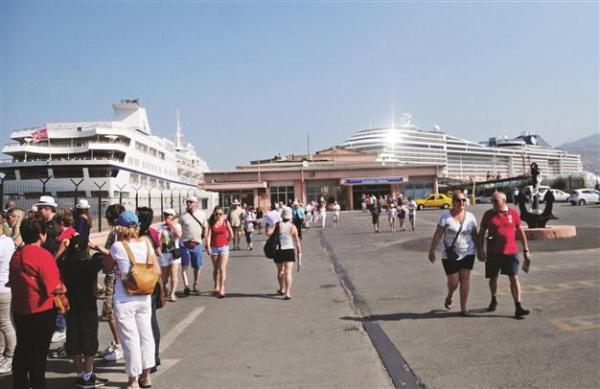
Rush of cruise ships to Aegean Town. Photo: DHA Photo

In case you experience a similar misfortune, and if you must travel in the summer and happen to be staying in downtown Istanbul, know that genuine hospitality resides in the less exclusive, less crowded parts of town. The further you are from the centre of the city, the warmer the smiles. Hospitality may not be at the top of your agenda as you plan your vacation. After hours of flying boxed up in a plane, however, I can tell you one thing – a warm smile will go a long way in ironing out your spine.

The stress Istanbul feels under the weight of 12 million tourists is most palpable on the streets that are often clogged – again, a problem one can only avoid by not planning a trip around peak seasons. Tourists can also help themselves by simplifying communication. For instance, at eateries, after a couple of days, I was less miserable pointing at photographs of food than trying new pronunciations. In taxis, I started penning the exact address and phone number down on paper instead of flashing my phone at the driver who was often already divided between the traffic and another phone.
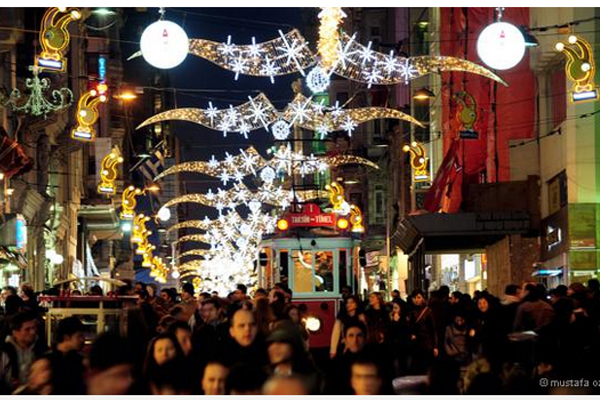
Holiday decorations light up the crowd in Istiklal street, a popular shopping route that runs from Taksim to Galata. Photo: AFP

Finally, when I reached my destination, almost all major historical and cultural sites offered audio guides. I could tune these to a language of my choice and give my deciphering muscles a break.

To sum it up, Istanbul has enough hotels, restaurants, bars, pubs, mosques, palaces, bazaars and boats to cater to a massive influx of vastly different tourists – rich and poor, ultra-conservative and ultra-liberal alike, but as millions pour in each year, the cultural exchange is more of a cultural showcase and the showcase is timed, limited and ticketed. Also, the setting is often more conducive to an exchange with other nationalities than the Turks themselves. For a relaxed yet Turkish immersive experience, I could have taken an outbound flight from Istanbul to any of the various destinations in the far corners of the country, all in less than two hours, but I didn't have enough time for that.
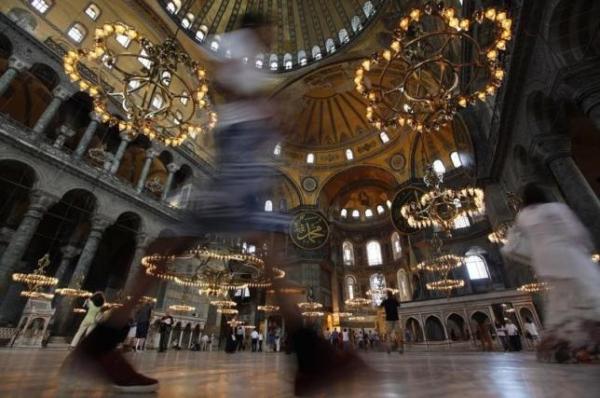
Local and foreign tourists visit the Byzantine monument of Hagia Sophia, or Ayasofya, which is now a museum in Istanbul. Photo: Reuters

Choose your district wisely

In Istanbul, the varying price of a half-litre water bottle is a good measure of the neighbourhood you are in and the prices you can expect in or around the vicinity. An easy to remember guide follows:

- Water under one Lira means you have somehow mixed with the Istanbullus and they will not fleece you – spend freely.

- Water at one Lira means the bare minimum tourist tax is on – bargain to no useful end.

- Water at two Liras means you've entered an upscale town – offer to pay half and be quick to jump shop.

- Water at three Liras and above means you are in swindle central and your pants can drop, anytime, without any warning – make good escape or find a part time job to clear accumulating dues.

Remember, the longer you stay in the three plus zone – which is primarily the Besiktas district in Istanbul – the sooner you will reach the end of your finite and dwindling budget.
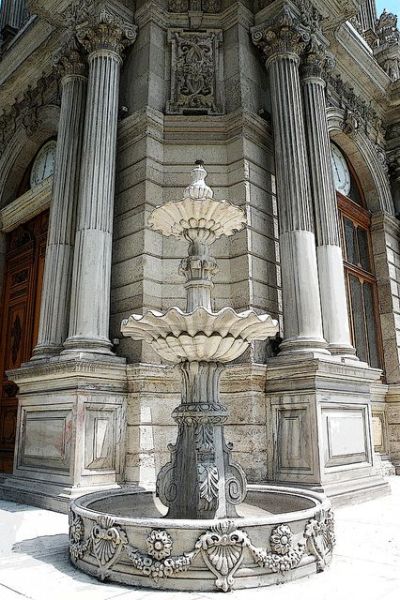
Dolmabahçe Palace Clock Tower, Istanbul, Turkey – located in the Beşiktaş district of Istanbul, Turkey, on the European coastline of the Bosphorus strait. Photo: Pinterest

Word of caution: Besides outrageously expensive water, some of the high-end eateries and clubs in Besiktas can take hours to reach, especially on weekends. Every time I ventured from Beyoglu (where I was staying) to Besiktas (where many of the popular restaurants were) the roads were clogged and Turkish expletives punctuated the pleasure of the cool, night breeze.
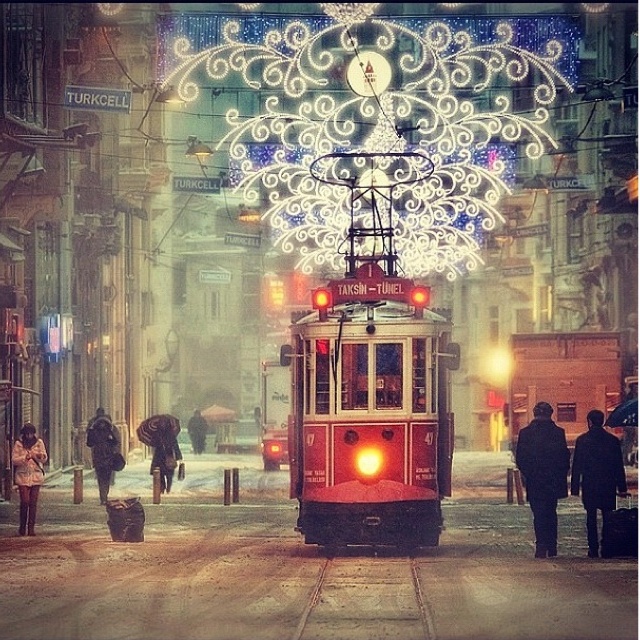
Beyoglu in the winters. Photo: Reuters

The locals looked annoyed, stiff, and reserved. I soon realised that enjoying a night in Besiktas without an 'entertainment mobile' to commute in, or without renting or owning a property on the exclusive Ciragan Caddesi or Muallim Naci Cadessi, was not a good idea. After a couple of lousy experiences, I neither had the financial health nor the mood to spend any more dollars. Consequently, I spent the rest of my evenings mixing, laughing and singing with the casual, infinitely warmer folks in the south of Besiktas and in the festive streets of Beyoglu where parties sprawled out of clubs, onto the streets where the festivity flowed deep into the night.

A café on Muallim Naci Cadessi. Photo: Pinterest

Regardless of class, gender, nationality and sexual orientation, people flock to Istanbul and find districts to suit their needs best. Similarly, to make the most of my trip, my favourite district was Beyoglu, since it was central to everything and offered a vibrant nightlife. In any case, a brief overview of the most popular districts should be enough to help you decide where you want to stay.
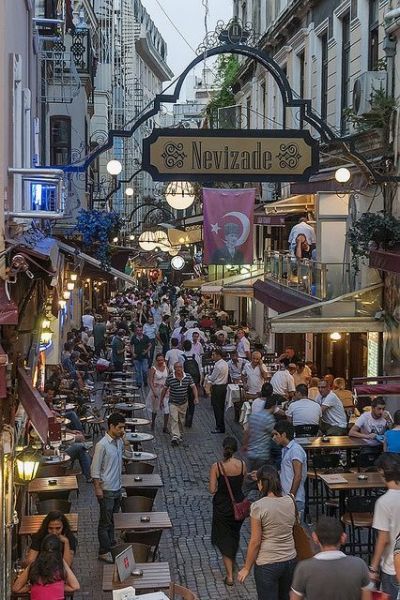
Nevizade Street. Istanbul, Turkey. Photo: Pinterest

Sultanahmet, Beyoglu and Besiktas are the areas most frequented by tourists. In terms of distance, these districts are not far from each other. In terms of traffic, however, commute times can range between 20 minutes and a couple of hours. So here's another brief, easy to remember guide to the districts. The highest concentration of the most significant historical sites is in Sultanahmet.

By evening time, Beyoglu is arguably the most happening district in Istanbul – it is littered with enough restaurants, pubs, theatres, live music bars, clubs, museums, cultural centres and antique shops to keep you busy.

Besiktas is where the ultra-rich eat and dine and party and where glamorous cars and celebrities outnumber pedestrians. Also, in terms of relative proximity, imagine a diagonal line, dropping down from right to left; Besiktas is on the top right, Beyoglu next and Sultanahmet is in the bottom left.

A view of the stadium at Besiktas. Photo: Pinterest

Essentially, Istanbul closes its doors to no one, and is always willing to accommodate the influx of en masse tourists. The Turkish government is even building the world's largest airport, which is expected to become operational in 2017. This development will lead to a widening of the tourist floodgates. Whether or not this also leads to other equally necessary infrastructural growth to absorb heightened tourist traffic is yet to be seen.
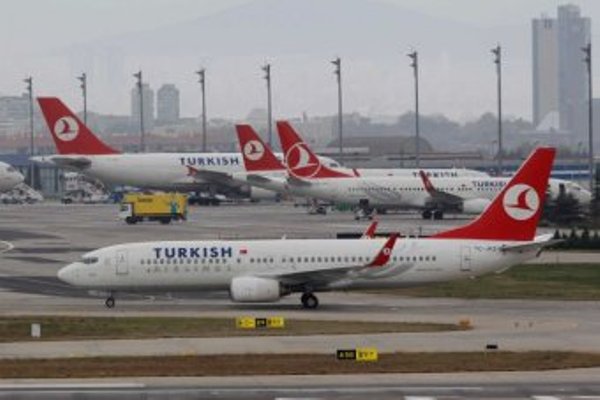
A Turkish Airlines plane prepares to take off from Ataturk International, which is currently the country's largest airport. Photo: Reuters

For starters, road congestion is a serious issue in Istanbul. To put things into perspective, 19 kilometres from my hotel to the airport, on a major three-lane highway, stole three hours of my time, and a six kilometres drive from Beyoglu to Besiktas for dinner took over an hour and so on.

Bosphorus suspension bridge in Istanbul. Photo: Reuters

Visa congestion

Besides traffic congestion in Istanbul, there is another kind of congestion the Turkish establishment needs to address immediately – the visa application process for Pakistani tourists.

The Turkish Embassy in Islamabad entertains 40 applications a day. For a population of 191.71 million people, a large proportion of which is now immersed in the alternative reality of Turkish soap operas, 40 applications a day are not nearly enough to meet the growing desire in Pakistan to visit Turkey. Forty applications a day means a maximum of 14,600 visas in a year. For a country that hosts 36.84 million tourists, with Germans taking the lead, is 14,600 visas not a stingy number?Indeed, Pakistanis with UK, US and Schengen visas can get an online visa to Turkey with a click of a few buttons, but what about travellers looking specifically to travel to Turkey? Considering all the recent song and dance about Pak-Turk friendship, why are the Turks avoiding us like the plague?

Additional visa officers at the embassy could ease the stress at the gates of the Diplomatic Enclave where aspiring travellers queue up several hours before the embassy opens shop. At the gates of the Diplomatic Enclave, an immense, body-hugging human chain waits to interact with a visa officer, and seldom finds one. Why? Because the 40-person list is designed to favour the few who either have private access to the Diplomatic Enclave or a contact at the embassy. Hence, when the shuttle service to the Enclave begins to operate at 6am, the list has already extended over 40 people and no new applications are entertained for the day.

About a month ago, when I too queued up for the shuttle service at 5:30am, I met other travellers who shared their frustrations with me. Some of them had been trying to reach the first 40 list for weeks and even on days when they took the first shuttle to the embassy, they were unable to make it through the gates because the list was invariably long.

So here's another handy tip to the Turkish visa process. If you know any VIP – minister or a Member of Provincial Assembly (MPA) or a Member National Assembly (MNA) – you can arrive at the consulate or the embassy and hope to get your visa within a few hours. If you know someone at the Ministry of Foreign Affairs (MoFA) who knows someone at the Turkish Embassy, you can connect with the visa officer at the end of the day (at 12:30pm) and return to the embassy or consulate for your visa after a week. If you know someone at the Diplomatic Enclave, you may enter the Enclave at 5am before the shuttle service rush, get your name down on the first 40 list, and then get a notification to collect your visa in two to three weeks. If you are unable to do any of the above, apply for either a US, UK or Schengen visa, and then acquire an e-visa for Turkey within minutes online. I believe the process at the consulate in Karachi is better managed compared to Islamabad, but I have no first -hand experience of it.

Why all the hassle is worth it

Because Istanbul is the land of incredible stories – some mythical, some real. Some hidden and some not so hidden. Stories that are grand. Stories that will enlighten and amaze you.

For instance, Istanbul is the only place in the world that claims to showcase the staff Moses used to split the sea in two or the cloak Prophet Muhammad (PBUH) draped over his shoulders, and these are only two sacred relics among a series of others. Istanbul is also the only city in the world divided by a strait, spreading over two continents.
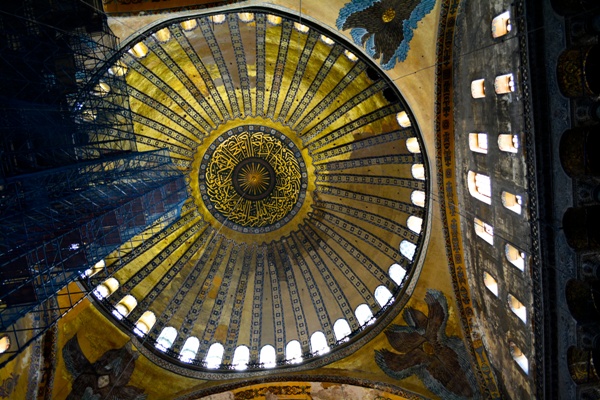
Inside view of the Hagia Sophia dome in Istanbul – the fourth largest dome in the world today.The dome is no longer a perfect circle due to multiple restorative projects. Photo: Khizr Imran

Beyond the richness of its architectural splendours from the Byzantine and Ottoman eras, and all the heritage it has managed to preserve, the undulating, multi-coloured landscape of Istanbul, dissected by the Bosphorus, adds a great deal of charm to the city – a charm most palpable at hill tops, Camlica Hill and Pierre Loti, and on the Bosphorus cruise.
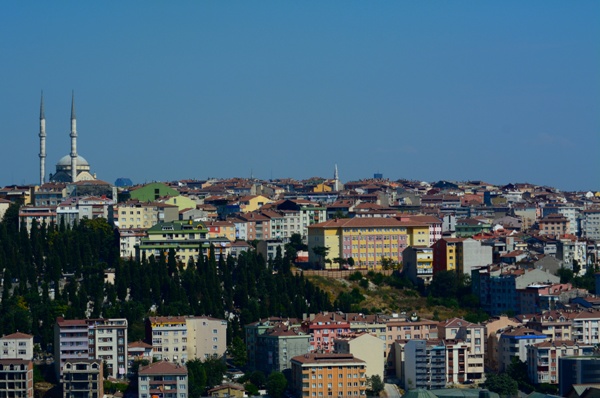
A view of the undulating city from a hill top restaurant, Pierre Loti Cafe, named after a French Naval Officer and Writer. A supporter of the Turkish War of Independence, and so a hilltop and a street in Istanbul was named after him. Photo: Khizr Imran

Essentially, how Istanbul was built, destroyed and rebuilt over changing regimes and rulers, or how its culture evolved and endured countless challenges is a story best told in person, in the alleys, mosques, palaces and museums of the city, where locals embellish Istanbul's story with the necessary detail.
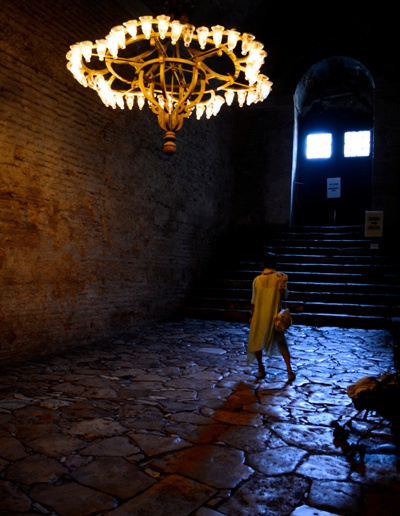
A passage inside Hagia Sophia. Floor dating back to 537. Chandelier dating back to 1847. Model in yellow dress dating back to August 12, 2015. Photo: Khizr Imran

I have returned to Lahore with many great stories but I can't possibly recount all that fascinated me. So I will leave you with a myth and a reality that intrigued me the most.

The myth is about the mysterious Bosphorus that wasn't a busy thoroughfare for European travellers until steamboats arrived in the 50s. Before that, the strait was known for entrapping and maybe even digesting many a ship, given its unpredictable undercurrents, taking direction from both the Sea of Marmara and the Black Sea. Much before the Bosphorus earned a reputation for troubling sailors, however, the Greeks named it Bous phorous, which meant 'passage of the cow'.

On one of the tours I took, the tour guide elaborated. She said,

 "According to Greek Mythology, Zeus one day seduced a priestess named Io. Zeus turned Io into a cow so that he could disguise her from his wife, Hera. But Hera was smarter than that. She understood everything, so she dispatched a swarm of flies to torment Io, the cow. To escape the wrath of the flies, Io swam across the strait separating Europe from Asia, and thus the strait came to be known as the Bosphorus."

The other story is of Istanbul's reality of mosques and dogs. In Pakistan, it's strange enough to mention the two in the same sentence. In Istanbul, however, animals coexist with places of worship; it's common to see cats and dogs straying around mosques. I was able to photograph one such dog. However, what absolutely amazed me is when I saw people praying in shorts and no one was pointing fingers at them, claiming who or what was 'inappropriate'.

Animals in Istanbul are pets of the city administration and the locals. The animals are fed and loved and they know a freedom that goes beyond any freedom that could ever be known to man. It's a beautiful sight to see carefree cats and dogs on the streets and religious sentiments that are more personal and private than punitive.
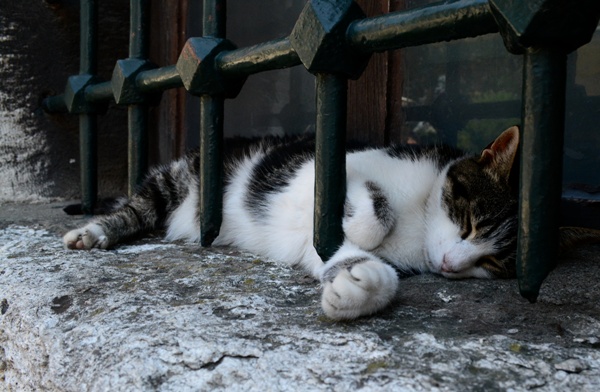
Perhaps the only place in the world where all animals are adored and looked after like royalty. Photo: Khizr Imran

Amidst the magnificence great empires left behind and the many other attractions, millions visit Istanbul to enjoy the city's display of secularism that will please anyone who understands the pitfalls of uncompromising, fundamentalist Islamic thought.

Considering the handful Turkish visas Pakistanis scramble over each year, there is certainly not enough cultural exchange between the two countries to push Pakistan towards the secular ideal its founder envisioned at its birth. And until this exchange develops substantially, for Pakistanis secularism will have to be a tourist attraction, accessible by air, seven hours away.

on Twitter, become a fan on Facebook

Khizr ImranKhizr Imran

Khizr is a columnist and an award winning social entrepreneur, currently researching affordable energy solutions for low-income communities in Pakistan. Khizr is based in Lahore. He tweets as @khizrtajammul.

The views expressed by the writer and the reader comments do not necessarily reflect the views and policies of The Express Tribune.


Source: Is the majestic and secular Turkey ready for its horde of tourists?

Monday, August 24, 2015

Turkey’s PPGI exports down 29.82 percent in January-June

Information Provided By:

SteelOrbis Elektronik Pazaryeri A.Ş. ("SteelOrbis")19 Mayıs Mahallesi, Atatürk CaddesiŞeref Yazgan İş Merkezi, No: 72, Kat: 7, D: 18Kozyatağı – 34736Istanbul, Turkey

Trade Registration Number : 541892MERSİS Number : 0470048178400014Customer Relations Officer : Sinem AlpkayaTel : +90 216 468 10 50Fax : +90 216 386 41 08

This Information Form has been drawn up in order to provide information to the customer ("Customer") who seeks a free trial on an electronic environment for the purpose of benefiting from the services offered by the SteelOrbis website at "www.steelorbis.com" prior to acceptance of the Membership Contract, and it allows the Customer to gain clear information on the terms and conditions of the membership to be established as well as to review the text of the Contract in question.

The following successive steps shall be taken in order to establish a free trial:

- The Customer selects the "Free Trial" option on the home page at http://www.steelorbis.com.- The Customer provides all information requested in the "Free Trial Application" form displayed on the screen and confirms it.- SteelOrbis sends an account activation e-mail to the e-mail address of the Customer provided in the application form.- The Customer clicks on the activation link sent to his/her e-mail address and activates his/her account. The website Membership Contract is presented to the Customer during the account activation process.

Storage of the Membership Contract:

You can either save the Membership Contract on your computer or make print-outs of it for storage. The Membership Contract accepted and confirmed by the Customer is not kept by SteelOrbis. You can always get access to the standard Membership Contract displayed on the website. However, as amendments may be made to the standard Contract, it may include some variations in comparison with the text approved by you. Accordingly, it may not be possible for you to access on the website the text you originally approved.

Data entry errors:

The information you should provide for membership application and the fields you should fill in are indicated during each step of the operation. You are obliged to provide such information. If you leave the required fields blank, the system will issue a warning. Please fill in all necessary fields. Prior to the completion of the operation, all data entered by you in the previous step will be displayed once more. Please make sure that the information provided by you is accurate and complete before finally confirming the operation; any missing or incorrect information should be completed or corrected. Any amendment or correction on the information provided by you after the confirmation may be performed by means of website logins after the establishment of the membership.

Our confidentiality policy:

Please click here to review our confidentiality policy.


Source: Turkey's PPGI exports down 29.82 percent in January-June

Sunday, August 23, 2015

Before It Can Hope to Fight Militants, Turkey Has Its Own Troubles To Tame

Transcript :

TESS VIGELAND, HOST:

Turkey will need to start forming a temporary government next week after politicians failed to agree on a coalition to run parliament. But gridlocked politicians are fast becoming the least of Turkey's worries. Dozens of security forces and hundreds of Kurdish fighters have been killed after the collapse of a two-year ceasefire. Sympathizers of ISIS have named Turkey as their latest target. And on top of all of that, the country's popular Aegean coast is swamped with immigrants desperate to get to Europe. NPR's Peter Kenyon joins us from Istanbul. Hi, Peter.

PETER KENYON, BYLINE: Hi, Tess.

VIGELAND: And not long ago, Turkey was the envy of the region, an economy out-performing most EU countries. This seems like a very swift turn of events.

KENYON: Well, basically, you're looking at a country here awash in crises. The Turkish lira's hitting record lows against the dollar. Every day, the headlines bring a new bad subject to bear. As far as ordinary Turks can tell, their leaders are too busy fighting over power to do much about it.

VIGELAND: And this week, as we mentioned, the Islamic State called on supporters to attack Turkey. There was a new video from them. Are Turks worried about that threat?

KENYON: They are, very much so. No one really knows how many ISIS sympathizers have crossed into Turkey at this point. Turkey analyst Soner Cagaptay at the Washington Institute for Near East Policy says these calls for an attack came after the president, Recep Tayyip Erdogan, reached agreement with Washington to let U.S. jets launch air strikes against ISIS from Turkish bases. Here's how he put it.

SONER CAGAPTAY: Unfortunately, I can predict that Turkey could face further ISIS attacks in the future.

VIGELAND: All right. Well, Peter, you are about to begin a reporting trip to southeast Turkey where the resumption of hostilities between the army and Kurdish militants is really being felt most acutely. How did this peace process fall apart?

KENYON: Well, this is something that was once seen as a crowning achievement of Recep Tayyip Erdogan, if he could achieve it, ending these decades-long conflict with the Kurdistan Workers' Party, or PKK. They harbor ambitions of an independent state. But two years of talks have now collapsed. Roadside bombs are killing Turkish soldiers and police, and Turkish security forces say nearly 800 Kurds have been killed in military strikes. That figure is not confirmed, but it's certainly a sign that things have really deteriorated.

VIGELAND: All right. Well, moving on to the next disaster. Turkey also shouldering a huge refugee burden, hosting some two million people fleeing conflicts in Syria, Iraq, elsewhere. And now it's being criticized for not preventing thousands of people from attempting to get to Greece in these small, inflatable boats.

KENYON: Well, it's true, and people are saying they're not doing enough to stop them – that's Turks living on the coast who are saying that and, of course, European leaders. The island of Kos is just a few miles offshore. It's a favorite destination for these migrants. Many Turks have mixed emotions, really, about it. I mean, they're proud of their government's humanitarian generosity hosting all these people, but they're growing increasingly frustrated with some of the fallout.

VIGELAND: Well, Peter, all of this happening as Turkey's ruling party is stumbling at the polls, not able to form a coalition government – you have to wonder what Turks are thinking at this point.

KENYON: Absolutely. It is a big question. The politics are interesting. Analysts say Erdogan is gambling that all these crises will drive voters back to the ruling AK party in the elections this fall. Time will tell if he's right, but the question is what kind of country will be left at that point. I mean, one example, Turkey's supposed to be hosting a G20 summit this November, right there on the migrant-clogged Aegean coast, at a time when the economy's slumping. It's not even clear there'll be a government in place when these dignitaries are due to arrive. Now the Turkish leaders are saying calm down. Things will turn around. It's OK, and Turks are certainly hoping that's the case, but they don't have a lot of confidence right now.

VIGELAND: NPR's Peter Kenyon speaking with us from Istanbul. Thank you.

KENYON: Thanks, Tess. Transcript provided by NPR, Copyright NPR.


Source: Before It Can Hope to Fight Militants, Turkey Has Its Own Troubles To Tame

Saturday, August 22, 2015

Greece Attracts the Tourists While Unrest Keeps Visitors From Turkey

Turkish tourism has been hurt by the unrest in the neighborhood and Russians staying away because of the weakness of the ruble. Greece's debt problems haven't turned off its tourism stream.

— Dennis Schaal

Greece and Turkey — neighbors, historic foes — share the same blue Aegean waters, tasty food and ancient ruins, though only one has triumphed on the tourist front. While near-economic collapse in Greece proved to be no deterrent in attracting visitors, Turkey's proximity to war-torn Syria and the threat of indiscriminate acts of terrorism were turn-offs.

Things didn't look good for Greece going into the summer as capital controls went into effect. However, sun-seekers and island hoppers simply lined their pockets with cash. July turned out to be a record-breaking month, according to the latest available figures.

Just a few miles east of the Greek islands lies Turkey, where the economy is actually growing but the tourism scene is far from rosy.

The number of tourists flying into Turkish airports started to fall in April, and there's been an escalation of violence in the country, culminating in the Wednesday attack on Dolmabahce Palace, one of Istanbul's most popular tourist sites. That incident creates fear among foreign visitors that they could be caught in the wrong place at the wrong time.

Other factors are also weighing on tourism. Turkey used to be one of the top travel destinations for Russians. The ruble's crumble means many can no longer afford to go. Tourists arriving from Russia tumbled 24 percent in the first six months of 2015 compared to the same period last year, according to the Turkish Ministry of Culture and Tourism.

Even Turks are flocking to vacation in Greece, where the cost of living has decreased dramatically compared to their homeland. As a result, Turkey ranked sixth among Greece's tourists by origin with 831,113 visitors in 2013, the latest available data. That's a 38 percent jump from the year before.

To contact the authors on this story: Giovanni Salzano at gsalzano@bloomberg.net Sangwon Yoon at syoon32@bloomberg.net To contact the editors on this story: Flavia Krause-Jackson at fjackson@bloomberg.net Victoria Stilwell at vstilwell1@bloomberg.net

This article was written by Giovanni Salzano and Sangwon Yoon from Bloomberg and was legally licensed through the NewsCred publisher network.


Source: Greece Attracts the Tourists While Unrest Keeps Visitors From Turkey

Friday, August 21, 2015

Why Tourists Are Still Flocking to Greece And Avoiding Turkey

Greece and Turkey — neighbors, historic foes — share the same blue Aegean waters, tasty food and ancient ruins, though only one has triumphed on the tourist front. While near-economic collapse in Greece proved to be no deterrent in attracting visitors, Turkey's proximity to war-torn Syria and the threat of indiscriminate acts of terrorism were turn-offs.

Things didn't look good for Greece going into the summer as capital controls went into effect. However, sun-seekers and island hoppers simply lined their pockets with cash. July turned out to be a record-breaking month, according to the latest available figures.  

Just a few miles east of the Greek islands lies Turkey, where the economy is actually growing but the tourism scene is far from rosy.

The number of tourists flying into Turkish airports started to fall in April, and there's been an escalation of violence in the country, culminating in the Wednesday attack on Dolmabahce Palace, one of Istanbul's most popular tourist sites. That incident creates fear among foreign visitors that they could be caught in the wrong place at the wrong time. 

Other factors are also weighing on tourism. Turkey used to be one of the top travel destinations for Russians. The ruble's crumble means many can no longer afford to go. Tourists arriving from Russia tumbled 24 percent in the first six months of 2015 compared to the same period last year, according to the Turkish Ministry of Culture and Tourism.

Even Turks are flocking to vacation in Greece, where the cost of living has decreased dramatically compared to their homeland. As a result, Turkey ranked sixth among Greece's tourists by origin with 831,113 visitors in 2013, the latest available data. That's a 38 percent jump from the year before.


Source: Why Tourists Are Still Flocking to Greece And Avoiding Turkey

Thursday, August 20, 2015

Holiday companies are 'hiding the REAL terror risks' from British tourists

ThailandGETTY•AP

The watchdog said trouble at Bangkok could spread to areas like Phuket due to Thailand's instability

After horror attacks in both Thailand and Turkey this week, watchdog HolidayTravelWatch has urged holiday firms to come clean on the dangers of some travel hotspots.

The firm's consumer director Frank Brehany said British people are continuing to head to places they believe are safe, yet have unstable governments where terrorists see tourists as a soft target.

He says both travel agents and holiday brochures refuse to discuss risks, while Foreign and Commonwealth Office (FCO) advice is often unclear.

The travel expert said: "It's not right as some travel people have said to me that 'there's risks everywhere in the world'. That doesn't identify the risk more apparent in some destinations.

"I describe Turkey for example as being at the gates of hell. Since the beginning of the year there has been a number of explosions there. Tourism is the soft target.

"We go to travel agents and tour companies for expert advice but instead we getting the spiel of a sales industry."

Mr Brehany said the lack of proper advice is continually turning people off of booking through travel agents.

Related articles

By being more open about areas they can rebuild trust, he said.

He added: "Our recent survey showed 80 per cent of people have not booked through a travel agent in the last 12 months. They think there are a thing of the past in this digital age.

"They think 'what extra value am I getting?'

"Travel agents should be looking at destinations and helping consumers mitigate the risks."

Criticising the Foreign Office website, which lists Spain and France as places of high terror threat alongside Libya and Iraq, he said the information available is inconsistent between nations and often differs from information given by other governments.

This week Hong Kong advised against travel to Thailand following the bomb blast, but Britain did not.

Women protesting in TurkeyAP

Women protesting in Turkey over the government's current war strategy

He is calling for its information database to be scrapped and for it to be started from scratch.

His main concern is with the travel companies.

He said: "I'm the last person to want to sound alarms in countries which desperately need that last dollar or last pound.

"But if the factors aren't right it will put people off tourism."

Mr Brehany advises those heading abroad to do their own thorough checks before heading to the travel agent.

Related articles

I describe Turkey for example as being at the gates of hell

Frank Brehany

That way they will be able to ask the right questions.

He said: "I would look at the FCO site and several brochures, online and in paper, and make comparisons.

"Where it involves risk I look for English language newspapers at the destination.

"I trawl through some of those sites to see what the real situation is locally and what crime levels are like.

"I then look at other country government's foreign travel advice sites.

"It seems like an awful lot of work but you are then an informed consumer."

The Association of British Travel Agents declined to comment.


Source: Holiday companies are 'hiding the REAL terror risks' from British tourists

Wednesday, August 19, 2015

WARNING: Britons in Turkey face new ISIS threat as terrorists urge locals to go on attack

TurkeyIG•GETTY

Britons in holiday could be hit by an Islamic State attack

A new propaganda video released online called on Muslims in the country to "conquer Istanbul", one of the Middle East's most popular destinations.

Just two months ago 30 British tourists were killed by an ISIS gunman on a beach in Tunisia.

The Home Office has already warned holidaymakers to avoid several regions in Turkey, particularly near the border with Iraq and Syria.

More than 2.5million British sunseekers visit the country, which has a 98.9 per cent Muslim population, each year.

TurkeyGETTY

ISIS terrorists have called on Muslims to conquer Istanbul

IstanbulGETTY

More than 2.5million British sunseekers visit Turkey each year

The seven-minute ISIS clip, titled 'A Message to Turkey', comes after the United States and Turkey formed a military coalition to fight the group.

In the video, a fighter speaks in Turkish to the camera and brands president Recep Tayyip Erdogan a "traitor" for allowing the US to "bombard the people of Islam".

He adds: "To the people of Turkey, you have to immediately rebel and fight against this Satan [Erdogan] who fooled you and made you a slave to crusaders and atheists."

"Athiests" is a reference to Kurdish PKK militants, some of whom have fought against ISIS in Syria.

He also warned eastern Turkey would fall into Kurdish hands unless Islamist fighters rose up.

The footage, which appeared to be shot in a desert, has been widely shared by sick ISIS supporters on social media.

It also includes archive footage of Erdogan at a press conference with Barack Obama and greeting King Salman of Saudi Arabia.

Six F-16 fighter jets arrived at a Turkish air base from America last week and began flying missions against ISIS in Syria.

And Turkey's foreign minister has promised the country will begin a "comprehensive battle" against the terrorists "very effectively and soon".

Related articles

The terror group used to use Turkey's border to bring foreign fighters and supplies into Syria – and did not appear to target Turkey in return.

But a western diplomat has warned Turkey is "a lot more exposed now, particularly as they can't easily back away from the commitment on [the US] using their bases".

Turkish officials reportedly seized 30 suicide vests in first half of this year that ISIS militants may have been planning to use on targets including police stations.

Map of worldEXPRESS

The Home Office has warned tourists to avoid several regions in Turkey

The terror group took 49 Turkish citizens – including children and police – hostage in Iraq on June 11 last year.

They were freed and returned to Turkey safely last September.

32 truck drivers were also captured in Iraq a day before but were handed over to Turkish officials after three weeks.

At a recent press conference Erdogan called for closer cooperation among the international community to fight ISIS.

He added that the group's actions "bear no relation to our religion, morality, conscience or culture".

Related articles
Source: WARNING: Britons in Turkey face new ISIS threat as terrorists urge locals to go on attack

Tuesday, August 18, 2015

5 days, 5 cities: A comprehensive guide to exploring Turkey

Here's a compre­hensiv­e guide for you to see the best of Turkey, all within the minima­l time period of five days

Turkey offers you a vast variety of landscapes, culture, and activities. PHOTO: Maliha Siddiqui

KARACHI: With the increasing popularity of Turkish soap operas among local audiences, Turkey is slowly gaining traction as a wildly popular tourist destination for Pakistanis. 

Among its popularity points are the easily available halal food options and cultural similarities to Pakistan. One of the biggest factors, however, is the fact that compared to its European neighbors Turkey remains a relatively inexpensive choice for a holiday.

Here's a comprehensive guide for you to see the best of Turkey, all within the minimal time period of five days:

Day 1: Istanbul

Where to stay:Hilton Istanbul Bomonti Hotel & Conference Center

This hotel offers respite to the traveler who would prefer some peace and quiet. While many travelers choose to stay at hotels located directly at Taksim Square, it may not always be the best option for those seeking a certain amount of tranquility. Hilton is located at a 5-10 minute drive from Taksim Square and is both comfortable and relatively affordable. Keep an eye out for summer sales exclusive to this hotel in order to make the most of your money.

What to do:Spend the day at Sultan Ahmet Square and Taksim Square

For the history buff, Sultanahmet Square offers a wide variety of historically significant sites. Located at the Square are the infamous Blue Mosque (Sultanahmet Mosque, pictured above), Hagia Sophia, Topkapi Palace and Basilica Cistern (pictured below).

Visiting all of these sites and admiring the beautiful architecture should take up a good part of your day. A point to be noted is that most historical sites and museums in Turkey close around 6pm and remain closed for the entire day on Monday.

PHOTO: VIRTUALTOURIST.COM

Having explored the historical side of Istanbul, what better way to relax than to do a little shopping? Head over to Istiklal Avenue at Taksim Square to get your fill of both Turkish and International stores. Once you've had your fill of shopping, you can relax at one of the many restaurants and cafe's at Taksim Square. Especially popular are the Rooftop cafe's that offer Turkish Tea and a view of the entire square.

A word of warning: Navigating your way through Istanbul in a Taxi can be a bit of a challenge. Local Taxi drivers are known to swindle their customers very frequently. In order to avoid these situations, it is best to approach the closest five-star hotel to your location (there are many of them close to each tourist spot) and to ask the concierge to get you a taxi. Most five-star hotels have their own assigned taxi's and they charge you according to a meter.

Another way to save being swindled, is to open Google maps and navigate the taxi through the shortest route possible.

Day 2: Izmir

Where to stay:Swissôtel Büyük Efes İzmir

Located very close to the ocean front, this hotel offers affordable luxury and excellent customer service. Hotel staff is highly accommodating and very helpful. An additional bonus is the various art installations located all over the hotel, making for an interesting and unique hotel experience.

What to do:Explore Ephesus

Located at about an hour's drive from Izmir, the city of Ephesus is one of the largest ancient cities of Turkey. Currently it is believed that only about 30 per cent of the city has been excavated and the remaining is still buried underground. Made almost entirely of marble, the city is a wonder to behold. Many of its impressive architectural accomplishments remain standing today while many others have been restored in recent times. Highlights of the ancient city include the Shrine of Virgin Mary, the Library and the Great Theatre.

Day 3: Antalya

Where to stay:Kempinski Hotel the Dome

Located just outside of Antalya in Belek, this hotel is the ultimate luxury resort and spa. Antalya is known as a resort destination, the Kempinski truly offers the best that resort life has to offer. From a full service spa and salon to a massive swimming pool and access to a variety of water sports at the beach, this hotel is the ideal getaway.

What to do:Duden Waterfalls and Old City Antalya

Duden waterfalls offers an absolutely breathtaking visual. The picture-perfect scenery will provide you with the perfect backdrop to take a series of stunning photographs. If you're looking for respite from the heat, duck into one of the many caves behind the waterfalls, or step out and grab some Dondurma (Turkish ice cream).

Spend the rest of the day wandering through Old City Antalya. The City offers many quaint little shops and restaurants. If you're looking for a meal with a view, wander over to the harbor. Eat at one of the many outdoor cafe's here while enjoying the postcard-worthy scenery around you.

Day 4: Ankara- Cappadocia

Where to stay:While it may be the capital of Turkey, a day trip to Ankara should suffice. We recommend driving from Ankara to Cappadocia during the latter half of the day in order to view the Salt Lakes and picturesque Turkish countryside along the route. The drive takes approximately four and a half hours.

What to do:Visit the Mausoleum of Ataturk and Anatolian Civilizations Museum

Mustafa Kemal Ataturk has been credited with the revival, modernization and success of present-day Turkey. Therefore it is only fitting that he be commemorated in such a splendid manner. Ataturk's mausoleum contains not only his grave but an entire museum dedicated to his personal and life's work. Even if you are not particularly fond of history, a trip to the mausoleum is worth just to see the breathtaking view of Ankara from atop.

For history buffs, the Anatolian Civilizations museum has everything you need. The museum contains artifacts from the many extinct civilizations that used to occupy the area. The museum won the 'European Museum of the Year' award in Switzerland in 1997.

Day 5: Cappadocia

Where to stay:Museum Hotel

Cappadocia has a very unique collection of boutique 'cave hotels'. The Museum Hotel is one such example. Built over a period of 4 years, the hotel has all the aspects of a luxury boutique hotel yet still manages to preserve the essence and romanticism of the caves that it is built in. In addition to this, the hotel is intentionally named 'museum' because it houses many unique historical artifacts.

What to do:Hot air balloon rides, Goreme Open Air Museum, Avanos, Fairy Chimneys, Imagination Land, Pigeon Valley, Dervish Performance

Cappadocia offers a variety of activities. Start your day off by literally rising with the sun in a hot air balloon, while taking in the gorgeous landscape of the valley below you.

Then venture on to Goreme open-air museum, where you can explore centuries-old churches carved into mountainside caves.

Venture on to Imagination Land, which has been featured in films such as the original Planet of the Apes.

Let the majestic Fairy Chimney's evoke your imagination even further.

Stop over at Panorama point to take in the breathtaking view of Pigeon Valley.

Finally, stop over in Avanos to try some local cuisine and admire the local ceramics work.

Cap off your day, and your trip to Turkey, with a memorable and moving Dervish Performance.

Whatever your itinerary, Turkey offers you a vast variety of landscapes, culture, and activities. So make the most of your next vacation and take a trip to this beautiful country for a truly unforgettable experience!


Source: 5 days, 5 cities: A comprehensive guide to exploring Turkey

Monday, August 17, 2015

All the ice cream you can eat? Now that’s a Turkey Hill Experience!

Every summer, I try to think of a new day trip or two to take with my grandchildren when they visit for a month from out of state. I have to give it some thought because their ages run the gamut from one to fifteen so the destination has to please them all. Being the itch that I am, I always want to try something new, somewhere I've never been before and have yet to discover myself. Luckily, living in the tri-state area, we never run out of options. This year, for one of our little road trips, we decided to head to Lancaster (Columbia, PA to be exact) to check out the "Turkey Hill Experience."

Who doesn't like ice cream, right? Even those of us down here in Wawa territory occasionally enjoy Turkey Hill ice cream, novelties and beverages. I thought it would be fun to go check out this new kid on the block, that just recently opened in 2011. The 17,000 square foot attraction highlights Turkey Hill's history while demonstrating its ice cream and iced tea-making proce sses.

Doorstep to doorstep, it took us about an hour and a half to get there from Delaware County. Turkey Hill Experience is not the factory where the products are made. We were told that's down the road from the "Experience," as are the dairy farms where the cows, the most essential part of the whole operation, are located. Rather, this is an attraction to educate consumers how the product is made, packaged and delivered to stores across the nation. All this education is done in a way that's fun for the entire family with fake mechanical cows to milk, a real-life delivery truck to pretend driving, a homogenization ball pit and and an ice cream theater (inside a giant ice cream container) to watch a video about the ice cream making process.

Lots of technology is incorporated into Turkey Hill Experience. Visitors can formulate their own ice cream flavor and name it, design their own ice cream carton and even create their own commercial to market their personalized new flavor. The whole thing is then sent to visitors' home computers to share through social media with family and friends.

To top it off, visitors can visit the "Taste Lab" where they are given a large bowl full of vanilla ice cream. In the lab, visitors can add their own flavor extracts to the base, such as caramel, chocolate, coffee or others, as well as add some mix-ins like nuts, candies, fruits, espresso beans and such. They then place their new concoction into a commercial freezer. When the time is up, visitors get to eat their finished product or take it home if they live closeby. I know this sounds an awful lot like Delco's FroYo places (think Yogurtland or Mango), but the instructors wear lab coats at Turkey Hill Experience and it's set up to look like a laboratory too, which makes the whole thing really feel like you're in a lab.

I forgot to mention that throughout the entire Turkey Hill Experience, visitors can sample all the ice cream they could possibly eat. Come to think of it, the place might not be quite as much fun if a person is lactose-intolerant. There are all kinds of flavors to sample (and the sample cups are ample size, comparable to a small cup of ice cream if you ordered it elsewhere). My group's hands-down favorites were Moose Tracks, Phillies Graham Slam and Party Cake flavors. Additionally, there's a Tea Room, where visitors can have all the samples of tea, lemonade, iced coffee and other Turkey Hill beverages they desire (up to 20 different varieties of beverages are available). As a side note, the Iced Mocha Latte was awesome! There's no doubt that by the time visitors reach the Taste Lab, they are quite filled to the brim from the limitless ice cream and cold drinks.

The entire Turnkey Hill Experience was really cute—all the kids, and adults included, really enjoyed themselves because it was something different (and all the ice cream one can eat didn't hurt the positive reviews either).The experience is definitely aimed at families, and there are plenty of photo/selfie taking opportunities at each exhibit, which seem s to always be a plus these days for young and old alike. We all learned a lot about the ice cream and beverage industry (Did you know in 2014, that Butter Pecan replaced Vanilla as the most popular flavor of Turkey Hill ice cream?). In fact, on the ride home, we laughed as we quizzed one another on various Turkey Hill facts that we had learned that day. We had all been transformed into walking, talking Turkey Hill ice cream encyclopedias.

The Turkey Hill Experience reminded me somewhat of the Crayola Factory in Easton, PA for some reason. Both attractions are all about products (crayons and ice cream) that gave us good vibes when we were younger and provoke good feelings in us now that we're older.

Everyone who worked at Turkey Hill Experience was really friendly, courteous and nice, which made our visit there extra special. The exhibit area was really contained too, so the kids could basically run amok pretty freely from activity to activity without lines or restrict ions. Downstairs, upon entrance and exit, there is a unique gift shop with, what else, but Turkey Hill everything!

We could have truthfully spent more time at Turkey Hill Experience, but we had reservations at Strasburg Railroad and we knew the last train was at 3 pm. When planning our little road trip, we had decided to split our day and visit both of these family-friendly Lancaster-area attractions. Luckily, on the day we visited Strasburg, it was one of the Thomas The Tank Days so we had the extra bonus of activities for young children going on in addition to the 45-minute, round-trip  larger-than-life steam train ride through the tranquil Amish countryside to Paradise, PA and back. Continued...

Years ago, when my children were little (they are now in their 20s and 30s), we visited Strasburg Railroad, but I truthfully forgot how enjoyable it is. The train ride in one of the beautiful antique first class train cars, was relaxing as we rolled along at a leisurely pace, passing by more than 1,000 acres of farm fields. Again, the staff was friendly, polite and knowledgeable which made the experience a feel-good, positive one. After all the hoopla of Turkey Hill, it was nice to kick back on the comfortable velvet seats in the train car and just veg for awhile, imagining being a rider of yesteryear.

When we disembarked the train, we walked through the tents full of Thomas the Tank products and activities and browsed through some of the unique gift shops on the grounds, concluding with a stop at the Railroad Museum of Pennsylvania. Now, honestly, I am not much into trains, but I still enjoyed the exhibits highlighting the history and technology of railroading and the interactive , hands-on education center. I delighted in watching my grandchildren discover and learn about railroading, the industry that basically built our nation. For those who are fully into trains, this would be a train-lover's utopia.

For directions, admission prices and more information on Strasburg Railroad or the Railroad Museum of Pennsylvania, visit www.strasburgrailroad.com or call 1-866-725-9666. For more information on the Turkey Hill Experience, visitwww.turkeyhillexperience.com or call 1-844-VISIT-TH.

If you go to either or both places, I hope you enjoy the little day trip as much as my crew did. Originally, when we had planned the day, we were going to sneak in a Lancaster family-style lunch in between both attractions. However, on the actual day, we were so full from all the ice cream eating we did at the Turkey Hill Experience, that we skipped lunch altogether and finished our day waiting out one of those infamous summer storms while eating dinner at the Cra cker Barrel on Route 30 in Lancaster. If I ever go again, I must remember to eat breakfast first so I don't OD on the ice cream samples as we surely did this time around.

Lancaster is one of those versatile destinations like going into Philly or down to the Jersey Shore. No matter how many times you go, there are always new and exciting things to do and see. My grandchildren are here for another two weeks. We are busy planning another fun day trip or two in the tri-state area to make more lasting memories together and share some more priceless quality time. Isn't this really what summer is all about?

Readers can e-mail Peg DeGrassa at pdegrassa@delconewsnetwork.com or write her c/o DCNN, 1914 Parker Ave., Holmes, PA 19043.

Every summer, I try to think of a new day trip or two to take with my grandchildren when they visit for a month from out of state. I have to give it some thought because their ages run the gamut from one to fifteen so the destination has to please them all. Being the itch that I am, I always want to try something new, somewhere I've never been before and have yet to discover myself. Luckily, living in the tri-state area, we never run out of options. This year, for one of our little road trips, we decided to head to Lancaster (Columbia, PA to be exact) to check out the "Turkey Hill Experience."

Who doesn't like ice cream, right? Even those of us down here in Wawa territory occasionally enjoy Turkey Hill ice cream, novelties and beverages. I thought it would be fun to go check out this new kid on the block, that just recently opened in 2011. The 17,000 square foot attraction highlights Turkey Hill's history while demonstrating its ice cream and iced tea-making processes.

Doorstep to doorstep, it took us about an hour and a half to get there from Delaware County. Turkey Hill Experience is not the factory where the products are made. We were told that's down the road from the "Experience," as are the dairy farms where the cows, the most essential part of the whole operation, are located. Rather, this is an attraction to educate consumers how the product is made, packaged and delivered to stores across the nation. All this education is done in a way that's fun for the entire family with fake mechanical cows to milk, a real-life delivery truck to pretend driving, a homogenization ball pit and and an ice cream theater (inside a giant ice cream container) to watch a video about the ice cream making process.

Lots of technology is incorporated into Turkey Hill Experience. Visitors can formulate their own ice cream flavor and name it, design their own ice cream carton and even create their own commercial to market their personalized new fl avor. The whole thing is then sent to visitors' home computers to share through social media with family and friends.

To top it off, visitors can visit the "Taste Lab" where they are given a large bowl full of vanilla ice cream. In the lab, visitors can add their own flavor extracts to the base, such as caramel, chocolate, coffee or others, as well as add some mix-ins like nuts, candies, fruits, espresso beans and such. They then place their new concoction into a commercial freezer. When the time is up, visitors get to eat their finished product or take it home if they live closeby. I know this sounds an awful lot like Delco's FroYo places (think Yogurtland or Mango), but the instructors wear lab coats at Turkey Hill Experience and it's set up to look like a laboratory too, which makes the whole thing really feel like you're in a lab.

I forgot to mention that throughout the entire Turkey Hill Experience, visitors can sample all the ice cream they could possib ly eat. Come to think of it, the place might not be quite as much fun if a person is lactose-intolerant. There are all kinds of flavors to sample (and the sample cups are ample size, comparable to a small cup of ice cream if you ordered it elsewhere). My group's hands-down favorites were Moose Tracks, Phillies Graham Slam and Party Cake flavors. Additionally, there's a Tea Room, where visitors can have all the samples of tea, lemonade, iced coffee and other Turkey Hill beverages they desire (up to 20 different varieties of beverages are available). As a side note, the Iced Mocha Latte was awesome! There's no doubt that by the time visitors reach the Taste Lab, they are quite filled to the brim from the limitless ice cream and cold drinks.

The entire Turnkey Hill Experience was really cute—all the kids, and adults included, really enjoyed themselves because it was something different (and all the ice cream one can eat didn't hurt the positive reviews either).The exper ience is definitely aimed at families, and there are plenty of photo/selfie taking opportunities at each exhibit, which seems to always be a plus these days for young and old alike. We all learned a lot about the ice cream and beverage industry (Did you know in 2014, that Butter Pecan replaced Vanilla as the most popular flavor of Turkey Hill ice cream?). In fact, on the ride home, we laughed as we quizzed one another on various Turkey Hill facts that we had learned that day. We had all been transformed into walking, talking Turkey Hill ice cream encyclopedias.

The Turkey Hill Experience reminded me somewhat of the Crayola Factory in Easton, PA for some reason. Both attractions are all about products (crayons and ice cream) that gave us good vibes when we were younger and provoke good feelings in us now that we're older.

Everyone who worked at Turkey Hill Experience was really friendly, courteous and nice, which made our visit there extra special. The exhibit area was really contained too, so the kids could basically run amok pretty freely from activity to activity without lines or restrictions. Downstairs, upon entrance and exit, there is a unique gift shop with, what else, but Turkey Hill everything!

We could have truthfully spent more time at Turkey Hill Experience, but we had reservations at Strasburg Railroad and we knew the last train was at 3 pm. When planning our little road trip, we had decided to split our day and visit both of these family-friendly Lancaster-area attractions. Luckily, on the day we visited Strasburg, it was one of the Thomas The Tank Days so we had the extra bonus of activities for young children going on in addition to the 45-minute, round-trip  larger-than-life steam train ride through the tranquil Amish countryside to Paradise, PA and back.

Years ago, when my children were little (they are now in their 20s and 30s), we visited Strasburg Railroad, but I truthfully forgot how enjoyable it is. The train ride in one of the beautiful antique first class train cars, was relaxing as we rolled along at a leisurely pace, passing by more than 1,000 acres of farm fields. Again, the staff was friendly, polite and knowledgeable which made the experience a feel-good, positive one. After all the hoopla of Turkey Hill, it was nice to kick back on the comfortable velvet seats in the train car and just veg for awhile, imagining being a rider of yesteryear.

When we disembarked the train, we walked through the tents full of Thomas the Tank products and activities and browsed through some of the unique gift shops on the grounds, concluding with a stop at the Railroad Museum of Pennsylvania. Now, honestly, I am not much into trains, but I still enjoyed the exhibits highlighting the history and technology of railroading and the interactive, hands-on education center. I delighted in watching my grandchildren discover and learn about railroading, the industry that basically built our nation. For those who are fully into trains, this would be a train-lover's utopia.

For directions, admission prices and more information on Strasburg Railroad or the Railroad Museum of Pennsylvania, visit www.strasburgrailroad.com or call 1-866-725-9666. For more information on the Turkey Hill Experience, visitwww.turkeyhillexperience.com or call 1-844-VISIT-TH.

If you go to either or both places, I hope you enjoy the little day trip as much as my crew did. Originally, when we had planned the day, we were going to sneak in a Lancaster family-style lunch in between both attractions. However, on the actual day, we were so full from all the ice cream eating we did at the Turkey Hill Experience, that we skipped lunch altogether and finished our day waiting out one of those infamous summer storms while eating dinner at the Cracker Barrel on Route 30 in Lancaster. If I ever go again, I must remember to eat breakfast first so I don't OD on the ice cream samples as we surely did th is time around.

Lancaster is one of those versatile destinations like going into Philly or down to the Jersey Shore. No matter how many times you go, there are always new and exciting things to do and see. My grandchildren are here for another two weeks. We are busy planning another fun day trip or two in the tri-state area to make more lasting memories together and share some more priceless quality time. Isn't this really what summer is all about?

Readers can e-mail Peg DeGrassa at pdegrassa@delconewsnetwork.com or write her c/o DCNN, 1914 Parker Ave., Holmes, PA 19043.


Source: All the ice cream you can eat? Now that's a Turkey Hill Experience!

Sunday, August 16, 2015

Amid Perilous Mediterranean Crossings, Migrants Find a Relatively Easy Path to Greece

Photo A Pakistani man prayed on a beach on the Greek island of Kos on Thursday after he crossed in an inflatable rubber boat from Bodrum, Turkey. Credit Daniel Etter for The New York Times

BODRUM, Turkey — As darkness falls and the last of the shorefront cafes in Bodrum clear their tables for the night, dozens of migrants pour out of a waiting bus. In the gloam, they charge for the sea, dragging a large rubber dinghy.

Their smugglers point them toward the flashing lighthouse on the Greek island of Kos, as little as 25 minutes away in a good boat.

In their flimsy inflatables, they usually reach there by dawn, quickly puncture their dinghies so no one can force them back, then walk into town.

Viewed fr om either side, the passage, while risky, is remarkably organized and unfettered. Compared with other routes for migrants crossing the Mediterranean, where more than 2,000 people have died this year, it is a relatively first-class ride. So easy and efficient is it, in fact, that in July the route was used by more than 7,000 refugees — most fleeing wars in Afghanistan, Iraq and Syria. At least 2,000 crossed this week alone.

The human tide has overwhelmed the island of Kos, leading its mayor, George Kiritsis, to predict that if he does not get help from Athens, "blood will be shed." And it has left Greece — for now, foremost in Europe — struggling to balance how to humanely accommodate the refugees against the risk of encouraging still more.

Already, for those who have made the journey, seeking safety, opportunity and a new life, the welcome has been less than hoped for.

"In Istanbul, they let us use the toilets for free," said Ayman Almotlak, 31, a Syrian who teaches Arabic and made the crossing to Kos, speaking of the local merchants. "Here not. Why do the Greeks hate us?"

His traveling companion, a veterinarian, Nour Hamad, 31, was similarly disillusioned. "They throw bottles at us, sometimes glasses," he said.

Part of the reason is the sheer magnitude of the wave of migrants and refugees, which the Greek government has said is too much for such a crisis-ridden country — let alone an island like Kos — to handle.

Doctors Without Borders complained that the Greek authorities were "abusing" the refugees by, at one point this week, forcing them into a stadium where they remained without proper hygiene, food or water.

The International Organization for Migration, based in Geneva, said Friday that nearly 250,000 migrants had crossed the Mediterranean to Europe this year, already more than for all of 2014. Greece alone, it said, had reported 134,988 arrivals from Turkey this year.

Singling out the strain on Greece, the United Nations has called for urgent action to address the crisis in Europe.

For many of the refugees, Greece is seen as a steppingstone to Western Europe. Although Turkey is hosting nearly 2 million Syrian refugees, more than any other country, many Syrians say that they do not see a future there.

To get to Europe, they depend on a vast illegal migrant smuggling operation that has grown over the past year as the Syrian civil war grinds on.

"A year ago people were still hopeful that the war might end, but now, with no end in sight, people want to leave and build a new life," said Bashar, 32, a Syrian refugee in Bodrum, who did not want to give his last name. He had spent the last year in Turkey getting surgery after he was wounded by a barrel bomb.

In Bodrum, smugglers charge between $1,000 to $1,500 per person to transfer the migrants to Kos. The price includes the rubber boat and training some of the passengers on how to steer it.

Life jackets are not included and discouraged by some smugglers, who argue that they take up too much space.

"The proximity of the island makes it safer and cheaper," said Mosaab Alhamed, 32, a Syrian lawyer, as he prepared to set off from Bodrum.

"Sure, the boats get packed up to 50 people, which makes it risky, but I'm confident that I could swim if that happened," he added.

On a recent night in Bodrum after two of the boats took off, life jackets, socks and backpacks were scattered across the beach.

"The smugglers are cruel, they don't treat the refugees like humans," said Senol Bayrak, a local fisherman who observes the activity in the area. "For them every meter of that boat is a dollar and it counts."

Turkish authorities have been accused of turning a blind eye to the crisis unfolding along the country's southern shores, and allowing the refugees to pass through, something that has generated increasing tensions with their Greek counterparts.

Residents say that hundreds of boats leave throughout the night, and are intercepted only once citizens alert the authorities.

On Thursday night, residents watched as one of the boats left the shore and drifted in the direction opposite to Kos. Once the boat was out of sight, distressed shouts could be heard in the distance, prompting the residents to call the Coast Guard, who later intercepted the boat.

"They come when we call them, but they need to do more," said Erol, 69, a retired captain, who would give only his first name.

But the local military police insist that they are doing everything in their power to prevent the refugees from leaving via illegal and dangerous routes.

They say that they carry out extensive daily patrols, but that the vast numbers of migrants trying to leave at once is "unmanageable. "

"We are in close coordination with the coast guards, who are working hand in hand with Greece to save lives," a senior Turkish military police chief said on the condition of anonymity because he was not authorized to speak on the matter.

"The greatest obstacle is proving that they are planning to leave and catching out the smugglers who hide within their opaque network," he said as he looked out at the garden of the police station, where detained migrants lay listlessly under the trees.

A total of 1,799 illegal migrants trying to get to Greece were picked up on the Aegean in 44 separate operations from Aug. 7 to Aug. 10, while two human t raffickers were also detained, the Turkish Coast Guard Command said.

Among the refugees, the Syrians, who tend to be more middle class, come the most well-equipped. They almost always have cellphones and GPS, and they have memorized every step they must take as they head out of Greece and toward their destination, greater Europe.

"I have a map," said Mr. Almotlak, the Syrian teacher, tapping his head. "It is here — and on Google Maps."

Once in Greece, the smugglers organize trips for the migrants, give them tips, and connect them with buses, trains and taxis, all for a prearranged fee, while merchants sell them gear, such as tents.

Pack your 500-euro notes in zip-lock bags and carry them in your underwear, they are told. Download WhatsApp, so you can send instant messages.

The profiteering is both large and small. The passage from Bodrum to Kos might cost about $1,500, but once in Kos, Greek merchants also make money by selling equipment or charging as much as 4 euros, about $4.40, the price of a cappuccino, just to use the bathroom.

While many Greeks have extended their hospitality, providing food and water to the migrants, others resent their presence in the midst of the tourist season.

The tension has eased over the last few days, as the Greek government heeded the mayor's request to send reinforcements and relief to Kos, where refugees are camped out.

Athens has sped up the evacuation of the refugees by sending a dozen more people to process their papers, adding to the four or five who had been doing it. That has allowed about more than 1,000 people a day to leave the island on ferryboats for Piraeus, the port of Athens.

Yet the Syrians are a privileged class among the migrants. At home, Syrians have suffered during the lengthy civil war. But on Kos, being a Syrian is a badge of honor and, many of the refugees from elsewhere believe, a ticket to Europe.

Authorities say that among the migrants, there are hundreds — from places like Iraq, Iran or Afghanistan — who are posing as Syrians.

In Kos, Syrians have been given priority for lodgings in a huge ferryboat that docked at the island on Friday, intended to be used as a dormitory ship for migrants camped on the promenade and in public plazas.

At the opposite extreme from the Syrians are about 500 migrants from countries like Pakistan and Bangladesh who have been squatting in an abandoned hotel outside town, squeezed into about 60 rooms, with running water but no electricity.

Because the Syrians are from a war-torn country, the Greeks give them papers allowing them to stay in the country for longer than others.

Most do not want to stay in Greece, but this gives them time to make the trip north.

When they cross the border, they are in limbo again, and can be sent back, they say. So they avoid places like Western Union, where the police may lurk.

Instead, many carry cash or pick it up from middlemen along the way. Their goal is to make it to a country like Germany or Sweden and request asylum, then bring their families.

Mr. Almotlak calculated two possible routes: to Britain or to Germany. He settled on Germany, even though he preferred England, because of the cost.

He could travel from Syria to Germany for €3,000 to €4,000, he said, but England could take €10,000 or €12,000.

In Bodrum, on Friday, still more refugees were preparing for the voyage.

As Mr. Alhamed, the Syrian lawyer prepared to leave, he got news that his brother had left for the Greek island of Lesbos from a different bay on the Turkish coast.

Why they did not travel together? "Well if something happened then we'd both be gone," he said. "You should never put all your eggs in one basket."


Source: Amid Perilous Mediterranean Crossings, Migrants Find a Relatively Easy Path to Greece